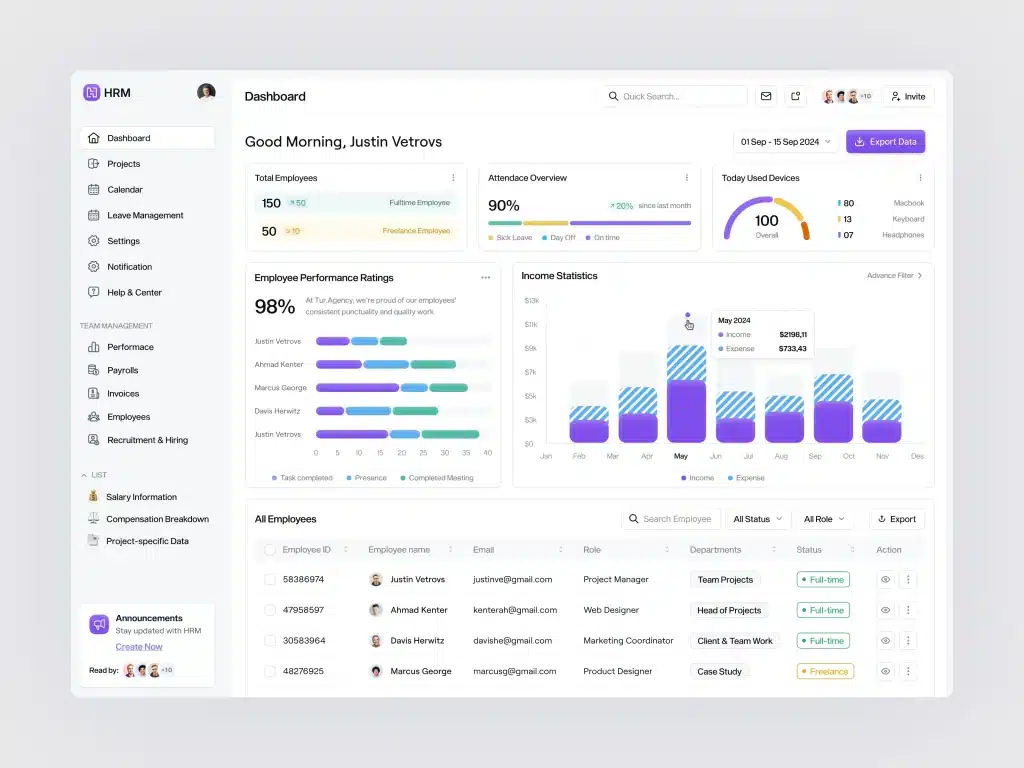
In the midst of the accelerating developments witnessed in the business world, Human Resources Management (HRM) is no longer viewed as a mere traditional administrative function limited to maintaining employee records and payrolls. Human Resources Management has transformed into a true strategic partner and a central element in achieving organizational goals and ensuring a competitive advantage for institutions. Investing in the human element and developing a stimulating work environment has become the standard by which the success of any economic entity is measured in the 21st century.
The modern work environment, characterized by flexibility, diversity, and increasing reliance on technology, requires an integrated and innovative approach to Human Resources Management. This approach does not only focus on attracting competencies but extends to developing them, motivating them, retaining them, and directly linking their performance to the overall strategy of the organization. In this comprehensive article, we deeply explore the strategic role of Human Resources Management, its fundamental pillars, and how digital transformation has revolutionized its practices, with a focus on the regional context and the importance of adhering to local legislation.
Section One: The Shift from Traditional Administration to Strategic Partnership
Historically, the Human Resources (HR) function primarily focused on routine administrative tasks, such as initial recruitment, paperwork processing, and ensuring basic legal compliance. However, leading organizations have realized that employees are their most valuable assets, and their effective management is the key to sustainable growth.
Today, strategic Human Resources Management is defined as the process of designing and implementing integrated policies and programs aimed at ensuring that the organization’s workforce effectively contributes to achieving strategic objectives. This transformation requires HR professionals to be familiar with the minute details of business operations and to possess the ability to analyze data to make informed decisions.
Key Roles of the Strategic HR Manager:
| Role | Description |
|---|---|
| Strategic Partner | Linking HR strategies (such as recruitment and training) to long-term business goals. |
| Operations Expert | Designing and implementing effective systems for performance management, compensation, and time and attendance. |
| Employee Champion | Advocating for employee interests and ensuring a fair and supportive work environment. |
| Change Agent | Leading organizational change initiatives, such as digital transformation or restructuring. |
This evolving role of Human Resources Management is what enables companies to adapt to changing market demands and build a strong corporate culture that fosters innovation and loyalty.
Section Two: The Core Pillars of Modern Human Resources Management
Effective Human Resources Management is based on a set of interconnected functions that work together to ensure a successful and productive employee lifecycle within the organization.
1. Planning and Talent Acquisition
The process begins with identifying the organization’s future needs for competencies (workforce planning), followed by attracting the best talent. Recruitment is no longer just about posting advertisements; it has become a process of marketing the organization as an “Employer of Choice” (Employer Branding). The recruitment process must be fast, transparent, and based on accurate competency assessment.
2. Learning and Development
In the age of knowledge, continuous training is a necessity, not a luxury. Human Resources Management must design training programs that bridge knowledge and skill gaps, ensuring that employees have the necessary tools to keep pace with technological and industrial developments. This investment directly benefits the quality of work output.
3. Performance and Compensation Management
An effective performance management system is one that links individual goals to organizational objectives and provides continuous feedback instead of the traditional annual review. As for compensation and rewards, they must be fair, competitive, and clearly linked to the level of performance and contribution.
4. Time and Attendance Management
Although it may seem like a simple administrative function, time and attendance management is the foundation of fairness and transparency in the workplace. It ensures accurate calculation of working hours, leave management, and overtime determination, which directly impacts payroll and legal compliance. Modern systems, such as those offered by Availo, use advanced technologies like facial recognition and fingerprinting via smartphones to ensure unparalleled accuracy, reducing disputes and saving valuable time for Human Resources Management.
Section Three: Digital Transformation and its Impact on Human Resources Management
Technology has revolutionized every aspect of Human Resources Management. Digital transformation has not only automated routine tasks but has also opened new horizons for data analysis, improving the employee experience, and enhancing operational efficiency.
Automation of Routine Processes
Modern Human Resources Information Systems (HRIS) enable the automation of tasks such as:
- Payroll Management: Accurate calculation of salaries, deductions, and allowances based on automated time and attendance data.
- Leave Management: Electronic submission and approval of leave requests, with instant updates to leave balances.
- Attendance Management via the Internet of Things (IoT): Using advanced technologies to record check-in and check-out from anywhere, with location and identity verification, which represents a paradigm shift in managing remote or multi-site workforces.
Data Analysis and Decision Making
Data is the new fuel for Human Resources Management. Digital tools allow for the collection and analysis of vast amounts of data on employee performance, turnover rates, the effectiveness of training programs, and even attendance patterns. This analysis (HR Analytics) enables managers to:
- Predict Turnover: Identify employees at risk of leaving and take proactive measures.
- Measure Training ROI: Evaluate the impact of training programs on actual performance.
- Improve Operational Efficiency: Identify and correct bottlenecks in administrative processes.
Integrating technology into Human Resources Management not only reduces human error but also frees up HR staff to focus on strategic tasks that require human interaction and deep analysis.
Section Four: Human Resources Management and Compliance with Regional Legislation
In the Arab region, specifically in the Kingdom of Saudi Arabia, Human Resources Management acquires an additional dimension: strict adherence to local legislation and regulations. Understanding and accurately applying these laws is not just a legal obligation but an essential part of building the organization’s reputation and credibility.
Labor laws in Saudi Arabia, for example, require extreme precision in recording working hours, managing contracts, and adhering to Saudization programs like “Nitaqat.” Any failure in this aspect can expose the organization to significant fines and penalties.
To ensure full compliance, organizations must rely on Human Resources Management systems that align with local requirements. Organizations can refer to official sources, such as the website of the Saudi Ministry of Human Resources and Social Development , for the latest information and updates regarding the labor system and ministerial decisions. Using automated time and attendance management systems, such as those provided by Availo, ensures that all data related to working hours, overtime, and leave is recorded and calculated according to specified legal standards, significantly reducing the risks of non-compliance.
Section Five: Enhancing Employee Experience and Operational Efficiency
The ultimate goal of modern Human Resources Management is to create a positive Employee Experience. A happy and engaged employee is a productive and loyal employee. Technology plays a crucial role in achieving this by simplifying processes.
When an employee can easily and smoothly complete their administrative tasks, such as recording attendance and departure via a smartphone app, or submitting a leave request in seconds, it reduces their frustration and increases their focus on their core responsibilities.
How Does Technology Contribute to Improving Employee Experience?
| Aspect | Positive Impact |
|---|---|
| Self-Service Access | Empowering employees to access their personal data, attendance records, and leave balances at any time. |
| Transparency and Fairness | Ensuring that all employees are subject to the same standards in calculating working hours and overtime. |
| Time Savings | Reducing the time spent on routine administrative tasks, increasing productive work time. |
| Effective Communication | Providing direct digital communication channels between employees and Human Resources Management. |
To maximize the benefit of these systems, organizations must be prepared to provide adequate support to their employees to ensure the smooth adoption of new technology. If you encounter any challenges in using smart time and attendance systems or any other Human Resources Management tools, you can always visit the help and support page for guidance and necessary solutions.
Conclusion: The Future of Human Resources Management is Digital and Strategic
Human Resources Management has proven that it is not just a supporting department but the main driver of transformation and growth in organizations. By adopting a strategic role, focusing on competency development, and maximizing the use of digital transformation tools, organizations can build a workforce capable of competing and achieving excellence.
The challenge today is not in finding the tools, but in choosing the right tool that integrates seamlessly with the work environment, meets regional needs, and simultaneously ensures the highest levels of accuracy and compliance. Investing in smart time and attendance management systems, such as Availo, is a crucial step towards achieving unparalleled operational efficiency and enabling Human Resources Management to focus on what matters most: building the organization’s future through its people.